Sabtu, 24 Juli 2010

Traditional Job in Mojokerto


Batik Art, A Nation Heritage and Cultural Property


The word batik is from a word in Javanese language is the means ambatik about the writing or incised dots. In the process of making batik cloth, batik craftsmen carve the motifs into a beautiful cloth using canthing containing hot wax. Batik process is done carefully and often have a batik craftsman to carve a series of points to gain a complex batik motif. Tools for batik is canting. A tool shaped like a pen and made of bamboo, copper-headed and narrow-mouthed at the edges. This canting is used to ladle the hot liquid wax, which is used as a cover or protection against dye coloring at the time. At the beginning of the process of making batik, batik carve a candle in a white cloth using canthing. But prior to drawing incised motifs with hot wax, cloth must be used first dipped into oil of plants and a soda solution, to facilitate the candle stick and to the fabric can more easily absorb the dye. Every time the cloth was given to another color, the parts that should not be subject to dye covered with wax, so more colors used to decorate the batik cloth, it gets too close it work. In the final stage, a layer of wax cloth cover is removed by boiling the cloth in boiling water after soaking in a solution of soda ash (sodium silicate) to perpetuate the batik colors. As a final result is a piece of batik cloth with beautiful motifs are stunning.

Batik technique is thousands of years old. Some experts even say that the batik technique may have originated from the ancient cultures of the nations in Africa, the Middle East (the ancient Sumerians) and several ancient nations in Asia to continue to spread until he came to Indonesia. The spread of batik techniques and culture can get to Indonesia, apparently thanks to the merchants from India who had visited areas in Indonesia in the past few centuries. Initially batik cloth known only limited environment or the royal palace where batik cloth originally worn only by nobles and kings. But along with the development, then the next batik cloth is widely known among the people and continue to grow until the present. The number and type of batik motifs that reaches thousands of this type has the characteristic of each region in Indonesia. Although there are types of printed batik, batik cloth but made and painted by using canthing still occupying the top level and preferences are still so attractive to consumers in the country and abroad. The level of difficulty and complexity and the type of fabric used also influence the selling price. Today not only batik cloth fabric, but also has a lot of batik cloth found fabric polyester, rayon, to silk. Even batik cloth made of silk material price could reach millions of rupiah.

Dissemination techniques and Batik Art Batik
Arts batik in Indonesia has been widely known since the days of the Majapahit kingdom and apparently continues to grow and spread to other kingdoms in the archipelago. The start spreading this batik art belongs to the people of Indonesia and Java in particular tribe is after the end of the 18th century or early 19th century. Produced batik batik is all until the early 20th century and printed batik is known only after the completion of World War I or around the 1920's. The material used in making traditional batik cloth among other coloring materials are made from native plants homemade Indonesia as mengkudu wood, pace, turmeric, height, Soga, indigo, while the material is made from soda soda ash, and salts made from mud.

Batik has become the kingdom Majahit culture, can be traced in the Mojokerto and Tulung Agung. Mojokerto is a region closely associated with the Majapahit kingdom during the first and the origin of the name Mojokerto something to do with Majapahit. Batik centers in Mojokerto are in Kwali, Mojosari, Betero and Sidomulyo. Batik area closest to the Mojokerto is in Jombang. In the late 19th century in Mojokerto, have used the main ingredients such as batik, woven white cloth itself and the drugs from Soga Jambal batik, mengkudu, indigo tom, height and so on. Import chemicals for new batik dyes known after World War I period that is generally sold by Chinese traders in Mojokerto. Batik cap came to be known along with the entry of drugs made overseas batik. Seal or stamp batik motif (the type of printed batik) was created in Bangil and entrepreneurs can buy batik Mojokerto in Sidoarjo Porong market. Porong market formerly known as the bustling market, where the results of batik production and Jetis cangkring Kedung Sidoarjo sold. As the world economic crisis before the era of Japan and the Japanese occupation, batik entrepreneurs come Mojoketo paralyzed. Batik activity appears again after the revolution which has become a regional Mojokerto Japanese occupation. Characteristic of batik Kalangbret of Mojokerto is almost equal to the output of batik-batik of Yogyakarta, which is essentially coraknya white and brown color and dark blue. Batik centers known since more than a century ago was in the village Majan and Simo.

Although batik is known since the days of Majapahit, but the development of batik art began to spread rapidly in the region of Surakarta in Central Java and Yogyakarta. It seems that the development of batik in Mojokerto and subsequent Supreme Tulung more influenced style of batik Solo and Yogyakarta. Majan batik art is a legacy from the days of the Diponegoro war. Color babaran Majan and Simo batik is unique because of the color red babarannya (mengkudu leather) and the other colors of the tom. One of the first centers of batik since there Sembung rural areas, where in the late 19th century, batik entrepreneurs mostly from Solo who came in Tulungagung. Until now there are still some families of Solo batik craftsmen who settled in the area Sembung. There are also areas in Trenggalek batik and some in Kediri, although some large-scale and household handicraft including batik handicrafts.

In the area of East Java, batik art history in the area of Ponorogo closely associated with the development of Islamic religion. In the area Tegalsari, Ponorogo, there is a boarding school that nurtured Kyai Hasan Basri, or known as the Great Tegalsari Kyai. Kyai Hasan Basri was taken into law by the king of the Kingdom of Solo. Batik art began to spread to Tegalsari as diboyongnya daughter to court Solo Tegalsari by Kyai Hasan Basri. In those days many families Solo courts are studying in boarding school. This event is brought batik art from the palace to the Ponorogo. Perbatikan areas in Ponorogo we can see that now is the area that is Kepatihan Wetan Kauman now and from here spread to the villages Ronowijoyo, Mangunsuman, Kertosari, Setono, Cokromenggalan, Duchy, Nologaten, Bangunsari, Cekok, and NGUNUT Banyudono. At that time the material was still wearing a batik cloth of woven self-made arms. New import white cloth known in Indonesia in the late 19th century. Batik stamp on the new Ponorogo known after the first world war brought by a Chinese named Kwee Seng from Banyumas.

Regional Ponorogo early 20th century in the famous batik indigo dye that does not fade and that's why batik entrepreneurs from Banyumas and Solo provides employment to many entrepreneurs in Ponorogo batik. As a result of the familiar printed batik Ponorogo production after the first world war until the outbreak of the second world war famous for its batik is batik cap rough blue mori. Crude market Ponorogo printed batik became known throughout Indonesia. Batik Solo and Yogyakarta at around 17.18 and 19th centuries, more and more widespread, especially in the areas of Java Island. The materials used for coloring in the first batik, still using the materials in the country such as Java Soga. The pattern remained among others known as "Sidomukti" and "Sidoluruh".

The origins of batik in the Yogyakarta area known since the kingdom of Mataram to-I with its king Panembahan Senopati. The first area is the center of batik Plered village. Batik limited at that time within the family court is done by the women helpers queen and then expanded followed by the wife of the courtiers and soldiers. At the official ceremony of the royal court families both men and women wearing clothes with a combination of batik and striated. As a result of the war on the Dutch colonial era, many families fled and the king who settled in new areas such as Banyumas, Pekalongan, and to the east Ponorogo, Tulungagung and so on. Families who fled the palace is a developed batik to all corners of the island of Java is now and growing by the creativity and uniqueness of local culture.

Typical batik Solo and Yogyakarta which began reaching the area of East Java batik patterns further refine existing in Mojokerto and Tulung Agung. Continue to spread to Gresik, Surabaya and Madura. In the area of West Java, batik developed in Banyumas, Pekalongan, Tegal, Cirebon. The development of batik in Banyumas Sokaraja centered in the area brought by the followers of Prince Diponegoro years after the 1830 war that later developed in Sokaraja batik dyes. Materials used mori homespun results and drugs used dyes tom tree, trees and mengkudu pace that gives the red color of yellow shade. Batik techniques and then be transmitted to people Sokaraja and at around the end of the 19th century the batik in this area has established trade relations with the batik from the Solo and Ponorogo. After the world war started batik union also done by the citizens of Chinese descent who is also trade batik. Furthermore batik art began to develop in the coastal areas, except in Pekalongan region itself, which is growing rapidly in Buawaran, Pekajangan and Wonopringgo. The existence of batik in these areas almost simultaneously with the batik other areas which is about the 19th century.

The development of batik art and technique out of the territory of Yogyakarta and Solo to expand further. Until the early 20th century art activity is known batik batik morinya with artificial materials in the country and also some imports. New printed batik known after World War I and began to widely used drugs and chemicals for batik made in Germany and the UK.

In the early 20th century, the weaving business there Pekajangan which produces spun yarn stagen own and simple. Soon began the art of batik is done by the workers who had been working in this weaving craft sector. Many workers in the sugar factory and Tirto Wonopringgo to switch jobs batik companies, because his wages higher than the sugar factory. Batik art known in Tegal began in the late 19th century. Dyes used homemade time taken from the plants pace / mengkudu, indigo, timber Soga and her cloth is woven themselves. Color Tegal batik was first babaran Sogan and gray after known indigo plant, and then develop into red and blue colors. Batik from Tegal as it had started reaching the West Java and traders said this was developed in Tasik batik and Ciamis. In the early 20th century was known mori imports and imports chemicals for the manufacture of batik.

Batik entrepreneurs in Tegal weak period in the capital and raw materials derived from Chinese traders in Pekalongan with batik on credit and sold on credit which gives the raw material. The development of batik in Kebumen faster than in Purworejo. Production as well as Yogyakarta and other Banyumas areas. While in the Bayat area, Tembayat Kebumen District, which is located approximately 21 Km east of the town of Klaten. Batik art in the village of Bayat has existed since time immemorial. Batik entrepreneurs in Bayat had most of the handicrafts and batik workers in Solo. Batik art in Kebumen is known around the 19th century by Muslim traders brought by the development of Yogya batik in Kebumen. Batik process is called first in Kebumen tengabang or Blambangan and subsequent final process is done in Banyumas / Solo. Around the early 20th century used to create the pattern of taste saffron is made from wood. Kebumen motives are trees, birds-burungan. Dye used comes from trees and indigo mengkudu tom. Use of chemicals imported for the manufacture of batik in Kebumen known around the year 1920, introduced by the employees of Bank Rakyat Indonesia. The use of copper seal is known around the year 1930 brought by Purnomo of Yogyakarta. Regional batik is a village in Kebumen: Watugarut, Tanurekso many and there are several other villages.

Batik art in Tasikmalaya district allegedly known since ancient kingdom "Tarumanagara" where the existing heritage is the number of trees there Tarum useful for making batik time. Heritage village which still exists today Wurug batik is famous for its batik craft, Sukapura, Mangunraja, Maronjaya and Tasikmalaya city. Formerly the center of government and the crowd is the village famous Sukapura, Indihiang located on the outskirts of Tasikmalaya now. Tasikmalaya batik production now is a mixture of batik-batik from Pekalongan, Tegal, Banyumas, Ghost of various patterns and colors. Batik was known in Ciamis around the 19th century, after the completion of Diponegoro war, where followers of Diponegoro much left Yogyakarta, heading south. Some areas there is settled Banyumas and there is a continuing part of the journey to the south and settled in Ciamis and Tasikmalaya now. Ciamis batik motif is a mixture of the Central Javanese batik motifs and influences and colors of Garut. Until the early 20th century batik in Ciamis developed little by little, from their own needs into market production. Was in the area of Cirebon batik something to do with the kingdom in this region, namely Kanoman, Kasepuhan and Keprabonan. Characteristic of the bulk of Cirebon batik motive images of forest and wildlife symbol. Sea motif which appears heavily influenced by Chinese culture, which the sultanate of Cirebon editing once Chinese princess. Batik featuring cirebonan eagle has been influenced by motives Yogyakarta and Solo batik.

In Jakarta, the art of batik was known and developed in conjunction with central areas other batik is roughly the late 19th century. Batik art brought by immigrants, immigrants from Central Java, and they reside in the central region of batik. Regional centers of batik in Jakarta scattered near Tanah Abang namely: Rubber, Lower Dam and Udik, Kebayoran Lama, and the Mampang Prapatan and Tebet. Jakarta since the pre-war union world has become inter-regional trade center with the port Indonesia Fish Market now. After the war finished the first part, batik production increases and batik traders looking for new marketing areas. Batik traders is the nation's many ethnic Chinese and Arabic, in addition to a small number of local residents. Jakarta Batik famous prewar crude batik, with the same color Banyumas batik.

Batik later developed throughout the major cities in Indonesia outside Java, such as regions such as West Sumatra, Padang area in particular. West Sumatra including consumer area batik since the days before the union world war, especially the production of batik-batik Pekalongan and Solo and Yogya. In West Sumatra who first developed the industry's famous hand-woven "weaving Silungkang" and "weaving plekat". Batik stamp began to develop in the Dutch colonial period when the demand will increase batik overwhelmed and tend to be filled. Batik dye is generally from plants such as mengkudu, turmeric, gambier, resin and so on. White cloth and white cloth taken from the former and the results of hand-woven. Batik company first appeared that the boat Padang Pariaman in 1946 include: Bagindo Idris, Sidi Ali, Sidi Zakaria, Sutan Salim, Sutan Sjamsudin and in Payakumbuh around 1948, namely Waslim (Pekalongan origin) and Sutan Razab. Color batik from Padang mostly black, yellow and purple and red pattern Banyumasan, Indramayu's, Solo and Yogyakarta. Now, batik has developed production Padang more advanced though still not as good as competing Java-made batik cloth. Existing printed batik sarong mostly. Batik art from time to time continue to spread to other parts of regions in Indonesia such as Bali, and many other areas with colors ranging from green, yellow, red, blue, white and brown.

Preserving Culture Art Batik in Indonesia
Batik Indonesia is a rich culture that should not be abandoned. Actually very unfortunate that the current traditional Indonesian batik is still difficult to patent, whereas the number and types of batik cloth from every region in Indonesia that is calculated to reach thousands of species. Variety and color motifs typical of each region is a cultural richness that must always be preserved. For example, coastal batik generally have a masculine style as in hue "Mega Overcast", because in some coastal areas batik work is common for men. Variety batik pattern and color to a certain extent also influenced by various foreign influences. For example, in the coastal areas of the coast, style of batik cloth to absorb foreign cultural influences brought by foreign traders. Bright colors like red that were originally popularized by the Indonesians, who also popularized the style of a phoenix, eventually also be adapted to the motifs and patterns of coastal batik, for example, Madura batik, which is often tinged with red, black, green, and white and decorated by various motifs of flowers and birds motif picture. Batik Madura characteristic generally used as a sarong, although there are some specifically designed for the official party shirt. Centers and commercial batik batik in Madura is in Pamekasan and Bangkalan. Madura batik traders in general is a citizen of Arab descent in addition to local residents who holds Madurese culture in everyday life.

Nation European colonizers who also took an interest in batik, providing a major influence in batik motifs and patterns typical of Indonesia, such as the motive of flowers (tulips) and various other objects motifs, including foreign colors like blue are beginning often found in batik-batik Indonesia. Various shades of ancient batik typical Dutch colonial era and modern batik made in Indonesia can be seen in the Tropenmuseum, Amsterdam, The Netherlands. It seems the intellectual property of the Indonesian people's motives in traditional batik, which thousands of these kinds and types, day by day more traced and replicated by the craftsmen from other countries for economic interests. If the government and batik makers would try to put together to try harder to register each type of motive and specificity of traditional batik internationally patented, this would certainly be a good opportunity for business development of international markets berpangsa batik.

Batik museum in the Netherlands, which collects thousands of Tropenmuseum the batik fabrics, always packed with visitors, and this also means an effective means of promotion in popularizing the tradition of typical Indonesian batik dress at the international level. Batik exhibitions abroad, especially in the Netherlands always attracted many visitors. Even publications batik exhibition in the Netherlands are often published in magazines such as magazines and magazines Round About Moesson, who not only published in Dutch, but also rising across Europe, America and Australia. Typical Indonesian batik has even covered by the magazine Island, United States. Acara Indonesian batik fashion show was also broadcast by Fashion TV, a French television who specializes in the fashion show impressions from various countries. It's a shame if the opportunity is there we just missed. Let us giatkan batik industry in the homeland!

Jumat, 23 Juli 2010

Medium Scale Industry


Sampoerna (PT Hanjaya Mandala Sampoerna Tbk) IDX: HMSP is an Indonesian tobacco company. Samperna/Philip Morris International is the largest Indonesian tobacco company, ahead of Gudang Garam and Djarum [1]. In May, 2005, subsidiaries of Altria Group completed the acquisition of 97.95% of the company. A block of approximately 40% of the outstanding stock was sold by the controlling Sampoerna family, especially by Putra Sampoerna, and other insiders in a negotiated transaction and the remaining shares were purchased in a tender offer. The series of transactions valued the company at approximately $5.2 billion. The investment in Sampoerna represented a strategic move for Altria. Philip Morris International was spun off from Altria in 2008. Although Marlboro is the most popular Western-style (non kretek cigarette), most Indonesians still smoke kretek cigarettes.

Sampoerna reported 2006 Net Sales of 29.55 trillion Rupiah (approximately $3.22bn using the February 22, 2008 exchange rate) resulting in 3.53 trillion Rupiah Net Income.

It produces kretek-type clove cigarettes. Its most popular brand is Sampoerna 'A' Mild, a filter cigarette in white paper. Although the cigarette is described as mild, it contains similar tar and nicotine levels to Marlboro Red. Along with variations on the Sampoerna Brand (filterless (known as Hijau, or green), menthol, etc.), the company's other key brand is "234" (pronounced Dji Sam Soe), an unfiltered cigarette with 39 mg of tar and 2.3 mg of nicotine per stick. Dji Sam Soe is the most premium cigarette in Indonesia. Its retail price per pack is the same with Marlboro Red (20 sticks), whilst 234 is packed 12 sticks.[2].

The company is named after the founding Sampoerna family, and was founded in 1913.

As of 1 April 2009 HM Sampoerna's President Director is John Gledhill who was previously part of Phillip Morris Australia.

Places of Interest


Welcome to Mojokerto Tourism
Mojokerto regency formed as Stage menthe based a governor J. Van Limburgstirum decision on 20 Junes 1918, Staatblad in 1918 Numbers 324. Then at Japan epoch, Mojokerto regency was having status, as ‘sidi’. Sie Cok and Sie Sangikat who had its proxy beside the proxy from Mojokerto area held the Government.

Mojokerto has known as the location of the biggest kingdom of Mojopahit. This regency also saves a lot of temples of Mojopahit Kingdom. Mojokerto was the government center of the whole nation area. So that, many temples had found in this area, especially in Trowulan district, Mojokerto regency. Beside that, Mojokerto also categorized as a fertile area and small area. It has big river named Brantas River. Farmers dominate the societies.

Beside Trowulan tourism area, Mojokerto also has many interesting places to be visited. Try to visit Dlundung waterfall in Trawas district. It offers beautiful scenery of natural waterfall with its fresh and cool air. The other beautiful waterfall in Mojokerto tourism is Coban Canggu waterfall that located in Padusan village, Pacet district.

Padusan, is a fresh place because there are many kinds of teak trees there and has an international level of swimming pool.


The Trowulan Museum is an archaeological museum located in Trowulan, Mojokerto, in East Java, Indonesia. The museum was built in order to house the artifacts and archaeological findings discovered around Trowulan and its vicinity. The location is one of the more important in Indonesia in relation to tracing the history of Majapahit[1]

Most of the museum collections is originated from the Majapahit era, however the collections also covered the era of Kahuripan, Kediri, and Singhasari kingdoms in East Java. The museum is located on the western side of the kolam Segaran. Trowulan museum has the largest collection of Majapahit relics in Indonesia.

Traditional Food


Klepon (pronounced Klê-pon) is a traditional Indonesian rice cake, from Javanese cuisine. It is a boiled rice cake, stuffed with liquid gula jawa (palm sugar), and rolled in grated coconut. Klepon is green because it is flavored with a paste made from the pandan or dracaena plant whose leaves are used widely in South East Asian cooking.

In other parts of Indonesia, such as Sumatra, klepon is called as onde-onde. While in Java onde-onde is refer to rice cake ball coated with sesame seeds filled with sweet greenbean paste. Klepon, along with getuk and cenil usually eaten as morning or afternoon snacks. To eat klepon must be careful because freshly-boiled one usually contains hot palm sugar liquid that will pop out in a bite.

Klepon is also sometimes called onde onde. According to my mum, onde onde is not coated in coconut and is usually served in sugar syrup, similar to what the Chinese call tang yuan which is served at special occasions like New Year and weddings.

Ingredients

200 g glutinous rice flour
180ml water
2 drops pandan paste or essence
75 g gula Jawa/Melaka (palm sugar), finely chopped
1 cup freshly grated coconut
1/2 teaspoon salt

1.
Place the glutinous rice flour in a mixing bowl and slowly add the water and pandan paste, mixing with your hands. Stop adding water when the dough forms a ball that pulls away from the sides of the bowl but doesn't stick to your hands.
2.
Pull off about 1 teaspoon of dough and flatten into a disc. Place about 1/2 teaspoon of sugar in the middle. Fold up the edges and seal completely. Roll into a ball about 2 to 3 cm in diameter with the palms of your hands. Place on an oiled plate. Repeat until all the dough or sugar is finished.
3.
Heat a large pot of water until it starts to boil. Prepare a large bowl of cold water. Combine the grated coconut and salt on a plate.
4.
Drop the balls one by one into the boiling water, making sure not to overcrowd the pot. When they float to the surface, let them cook for one more minute.
5.
Remove the balls with a slotted spoon and dunk them in the cold water. When they are cool, remove and drain well before rolling in the coconut-salt mixture. Serve immediately.


General Understanding of Kebaya


A Kebaya is a traditional blouse-dress combination worn by women in Indonesia, Malaysia, Brunei, Burma, Singapore, southern Thailand and some parts of Cambodia. It sometimes made from sheer material and usually worn with a sarong or batik kain panjang, or other traditional woven garment such as ikat, songket with a colorful motif.

The kebaya is the national costume of Indonesia, although it is more accurately endemic to Java and mojokerto.

First, the deeper explanation of the kebaya must be clarified by its design. Basically, the general understanding of the kebaya is a woman’s loose blouse made from cloth or silk (sheer materials) with sleeves. It tapers at the wrist and is fastened in front by a set of brooches or buttons along to the hip. It covers most of the upper which suits the eastern culture that holds respect in dressing. It is also gently shaped to flatter the figure. It is always matched with a batik sarong as it is used to cover the lower part of the body.

The Arrival of Kebaya’s Theories

According to the historical background of Malacca (the central port for many traders) the argument about the kebaya’s origin itself has so many theories. There is a big possibility that the kebaya might be the result of a European woman’s blouse adaptation. This argument is supported by the historical fact that during the colonization era in Indonesia, it is believed that the Portuguese brought the modern blouse to Indonesia which formed into the kebaya. Portugal was the first nation that invaded Indonesia before Dutch colonization (From the 16th to 17th century). The Portuguese arrived by the end of the 14th century and expanded its authority from Malacca to the Moluccas. The expansion of authority also can be considered as the way the western (Portuguese) blouse was introduced to the local people. After examining the Portuguese blouse, it can be seen that the blouse is not fastened in the chest with set of brooches, but the sheer material and drapery along the blouse can be categorized as the basic design of the kebaya. This could also inspire the local people to produce clothing that adjusted to the Indonesian custom, which is developed into the kebaya.

The theory that states that the kebaya came from china can also be considered logical. During the 13th to 16th century, China had massive immigrants move to South-East Asia. In the early 15th century, the emperor Zhenghe visited Samudra (Aceh, Sumatra Island) in order to persuade Samudra to start growing peppers because pepper was the most important product of export at that time. Pepper could give a big chance for people to have a good life (Bangko). This also can be the reason why the Chinese started to move to Sumatra Island, and brought their custom in dressing which formed into the kebaya. In fact, the Chinese costume, cheongsam, has a similarity with the kebaya’s design. Both of them are fastened in the chest with a set of brooches and cover most of the upper body part. The basic material for the cheongsam is satin, but now it also has been modified to be silk or cotton (sheer materials) (Lucia). These materials are the same as the kebaya. Similar to the kebaya, the cheongsam has many drapery ornaments to decorate the design.

Islamic and Arabian Cultural Values Influence

There are many types of the kebaya depending on the region where it developed. The Sundanese kebaya, with a hexagonal neck and the kebaya labuh, worn by the Malayan (Indonesian and Malaysian people) which ended at the knee, are all examples of the different forms. The last one closely resembles the Arabic habaya, a form of sailing dress originating in Saudi Arabia. The similarity of the kebaya labuh with the habaya strongly supports the idea that the kebaya originated in Arabia, which is the centre of Islamic culture. The kebaya is often said as the decorous dress because it does not expose the woman’s body and Islam teaches the women to always cover their body except their face and palm (Azhar). Even though the kebaya does not cover the hair, it supposes to have those Islamic values which already adapted for the local customs and tropical climate in Indonesia. The historian Denys Lombard also supported this argument based on discovering the linguistic analogy of the name kebaya which is similar with the name of the habaya itself (Bangko). One more important thing to realize is that the Arabian word for cloth is kaba, which obviously describes that the word kebaya comes from the combination of the Arabian words kaba and habaya (Bangko). Thus the name of the kebaya can be referred as ‘the daily wearable sailing costume’ for the society which adapting the habaya at its developing time.

If it is seen from the fact that Indonesia used to be the harbor of passing traders from the Middle East and China, the conclusion that the kebaya started at where most of those traders stopped is logical. The Malacca strait was the central harbor in Indonesia at the same time when the kebaya started to develop, approximately between 13th to 16th centuries. In the early 13th century, Islamic traders started to see Indonesia as a good target in spreading the new belief. Indonesia was also very rich with various spices so it easily attracted the foreign traders.

There is also a big possibility that the spreading of the kebaya in many regions of Indonesia was influenced by the Islamic traders that wanted to persuade local people to hold Islam as their belief. Since the changing political and cultural centre in South and North Sumatra in the 1300’s, Islam started to attach their belief to the big kingdoms so they could have ‘fast access’ in declaring Islam as the new belief to the local people (Islamic Trading). In 1323, Ibn Battuta as an Arabic traveler visited Samudra (a part of Aceh region, a province in the most northern part of Sumatra). It was documented at that time that there was a developed Islamic harbor kingdom or sultanate which strongly believed that it had a connection in trading with far countries such as Southern India and China (Islamic Trading). There were many Indian Islamic traders who gave the city of sultanate the name Pasai, derived from the word Parsi-Indian (a member of the close-knit Zoroastrian community based primarily in India) (Parsi). Under this name, the Pasai political systems began to be introduced to many regions. The most important thing was the language development system, which was a form of Malay written in Jawi (an adapted Arabian alphabet word) that being used in many Indonesian islands to communicate (Kerajaan Samudra). It was really helpful for many traders realizing the diversities in Indonesia and lots of traditional languages in every small region which made many people hardly connected in communication.

Pasai was known as a centre of science, and the sultanate developed a big kingdom named Samudra Pasai. It became the first Islamic kingdom in Indonesia which has the function as the harbor and centre of trading because it was placed in the edge of the Malacca strait. From the documentation, it says that Samudra Pasai ruled the area from the early 13th century to 16th century (Kerajaan Samudra). The connection between foreign traders, especially Islam, with Samudra Pasai made it easier to travel along to many places in Sumatra, even to Java and Bali. Besides the purpose of spreading Islam, the traders were also attracted by the various spices in Indonesia so they tried to find it in many places. From here, the Islamic traders which mostly Arabian could be considered brought their customs of dressing such as the kebaya to many parts in Indonesia. This is one fact that indicates the history of why the kebaya being spread in many places in Indonesia. As explained above, kebaya is a form of adapted culture so the local people in the area that was stopped by the Arabian traders adapted the costume into their own customs. This is also the reason why the modern kebaya has different designs depending on the place where they were introduced (Kerajaan Samudra).

The different kind of kebaya basically has two types, the first one is very elaborate and covers most of the body. The second one is more open and exposes the beauty of a woman’s body. Again both depend on the place where they were introduced. For example, the Javanese kebaya usually uses cloth shawls to cover their chest to look more polite because the major religion in Java is Islam. While the Balinese kebaya looks more ‘open’ and its materials are quiet similar with the modern kebaya, which is made by lace. It also has one accessory which is the waist band that is really tight and exposes the shape of women’s body. The majority of the Balinese religion is Hindu, and Balinese kebaya is usually worn for Hindu occasions. Hindu is a belief which has no obligation or rules for the woman’s to cover their body. Yet both examples in today’s society strongly support the idea that the kebaya was spread all over the region and developed based on where they were introduced.

The Approximate Time of Kebaya’s Arrival; Theories and Analysis

Datin Seri Endon Mahmood as a kebaya collector and the wife of the former Malaysia’s Minister in her book, The Nyonya Kebaya, believed that the kebaya started to be worn by the 20th century, or about the year 1920. The argument was supported by her research from the picture and photographs that show women in kebaya, and she found out that the oldest picture of a woman with kebaya was produced in the year 1920 (47). Still this is not reliable enough because the fact that the camera was still newly introduced (Kodak, a big camera company, was purchased in 1912 in America) (Bellis), but the Javanese local people have another fact that says the kebaya is the 20th century invention. In Mojokerto, a region in East Java, there is steps in the wedding ceremony of the dressing process. Those steps are traditional dressing process and modified dressing process, and this was clarified by Mbah Tun, wedding make up artist in Watesnegoro village in the 1960’s (Bab II). She said that at that time the women refused to wear the traditional costume because it was old-fashioned and preferred to wear the modified one. The traditional one was kemben (tube top) or the simple kebaya, and the modified one was a velvet black blouse (with similar design of the kebaya) which looks more elegant. The traditional one has already known for many decades, and started to be transformed since the era of 1950’s (Bab II). The traditional one had already worn the kebaya in simple concept, and the word ‘traditional’ itself means for long time. It gives sort of explanation that the people in Mojokerto itself already familiar with kebaya since the early 20th century.

On the other hand, historian Denys Lombard says the kebaya is the Indonesian woman’s blouse that was first-introduced during the era of 15th or 16th century (Bangko). Perhaps at that time it was not kebaya that being introduced, but more likely to the sailing costume or the habaya that used by the Middle-East traders to Indonesia. This theory is supported by the first arrival of Islam as a religion in Indonesia. By the 13th century, the political and cultural centre moved from southern Sumatra to northern region. The situation was about to change because Islam started to be the new belief among the society (Islamic Trading). It was easier to spread Islam from the upper class such as the kings that ruled most of the Sumatran region at that time by their strong access and the big kingdoms at that time were placed in Palembang (South Sumatra) and Jambi. From the northern part, the religion started to spread to the southern area by targeting those big kingdoms and began to reach Java. The problem is spreading and persuading people from the very old tradition to the new belief would take very long time and this was what happened at that time (Jide). It is not impossible it takes long time for the kebaya to begin adapted from those trading costumes that used by the Islamic traders. The adapting garments itself has been adjusted to the local condition, such as hot weather and material availability. This clearly gives the taste of Indonesia so it becomes the national blouse of the country. Denys Lombard did not write the exact place of where the kebaya started to be worn during the 15th to 16th century.

Plenty of Indonesian articles inform that before the 16th century, the kebaya was sacred and only to be worn by Javanese monarchy. It started to be worn as a blouse by European women when the Dutch took control of Indonesia (Metamorfosis, Hadi). This indicates that the kebaya already existed before the 20th century. Therefore from those two theories, the background and supporting arguments really have the insignificant difference because both of them have the same convincing level. It is hard to decide the approximate time of when the kebaya started to be worn in Indonesia by the blurry origin but both of them could be concluded that the kebaya is a form of invention that has developed since the 16th century. The kebaya continues to develop this day.

Conclusion

The many theories about the kebaya’s origin make it confusing because many countries besides Indonesia (Malaysia, Japan and South Africa) struggle to claim the kebaya belongs to them. In this case, Indonesia has won the competition by its fast movement in patenting the kebaya as their official traditional costume on November 2006 by an Indonesian designer, Adjie Notonegoro (Eri). But still, Indonesia should be aware whether there will be another country who can not accept the declaration of the kebaya belonging to Indonesia. In order to avoid any national heritage loss, the analysis of the kebaya can be really helpful to solve what country has the most-right to the kebaya. This analysis started from the many theories behind the kebaya’s origin and the result of acculturation and adaptation of another culture’s dressing custom by the local people.

Tracing the track of historical conditions in Indonesia, it is more reliable to say that the Islamic traders were the most influential traders in spreading their culture and customs in Indonesia. Besides the many of Islamic artifacts in most of the Indonesian islands, Indonesia also has become the largest Islamic country in the world. The truth that the kebaya must be influenced by Islamic values is undeniable. From this, the consideration of the kebaya was a form of acculturation from the Islamic Middle East traders is more valid rather than the other theories that say the kebaya came from the acculturation of Portuguese or Chinese customs. If one of the other theories was true, than perhaps their customs would be the major custom in Indonesia, such as their beliefs (Catholic from Portuguese or Confucianism from China). The truth is their beliefs became the minority in Indonesia, so it has proven that the Islamic traders were the one who brought many influences in Indonesia realizing that most of the Indonesian kingdoms before the arrival of Islam were Hindu or Buddhist. This argument is also supported by the origin of the kebaya’s name. The Arabian word for cloth is kaba, and during the trading era, their sailing costume was named habaya. From this linguistic analysis, the kebaya clearly indicates that the name was the combination of the words kaba and habaya (Bangko). The Islamic traders who brought their dressing customs were the Arabians. They inspired Indonesian dress. Therefore the kebaya is a form of acculturation that has been adapted by the Indonesians from the Arabian culture. The Arabians were the ones who brought the costume that became the kebaya. This proves that the kebaya already existed for long time in Indonesian is also supported by Denys Lombard and the consideration is that the kebaya is a form of invention that has been developed since the 16th century until the 20th century and still modified now.
The reason why the kebaya can be found in Malacca which is apart of Malaysian region must be from the fact that it was the location of where the Arabian started to expand their culture in South-East Asia. The Arabian traders used the Malacca strait to setup harbor, and they must be separated between the Pasai harbor and Malacca harbor. Also, Malaysia and Indonesia during the trading era were considered as one region (The Hindia archipelago). Thus this became the root of why the kebaya also developed there. The Indonesians have always believed that the kebaya is their national costume.
From discovering the analysis of historical background, Indonesia and the kebaya already became something inseparable, so the consideration of the kebaya belonging to Indonesia is valid based on the society and historical background perspectives. The kebaya is a form of adaptation of Arabian Islamic culture and has been customized by the local people. The traders went to Indonesia seeking spices and spreading Islam using the Malacca route and used Pasai harbor whenever they arrived. Even though the kebaya does not originate authentically in Indonesia, the fact that it already belongs to the nation means it must be protected by the people themselves. The kebaya is a precious heritage that should be persevered and never removed. It is important to Indonesians to understand the real history of the kebaya so they can truly preserve their heritage.


Traditional Music

Gamelan

A gamelan is a musical ensemble from Indonesia, typically from the islands of Bali or Java, featuring a variety of instruments such as metallophones, xylophones, drums and gongs; bamboo flutes, bowed and plucked strings. Vocalists may also be included.

The term refers more to the set of instruments than to the players of those instruments. A gamelan is a set of instruments as a distinct entity, built and tuned to stay together — instruments from different gamelan are generally not interchangeable.

The word "gamelan" comes from the Javanese word "gamels", meaning to strike or hammer, and the suffix "an", which makes the root a collective noun. Real hammers are not used to play these instruments as heavy iron hammers would break the delicate instruments.


Musical Instruments

A large majority of Indonesian traditional instruments tend to be made of bamboo, as it is readily availableAngklung throughout Indonesia. School children are often taught basic music on instruments such as Suling, Gambang or Angklung. A suling is a small flute-like instrument, which resembles a recorder, however it is made of bamboo. It has holes down the length of the instrument that when covered or uncovered by the player's fingers result in the various notes.
Angklung are another traditional Indonesian instrument that is made from bamboo, originating from West Java. Angklung are actually a group of various sized hand-held instruments made from bamboo. When the angklung is shaken is produces a chord of music. The size of the angklung determines the chord that it produces. Songs are played with one person standing up behind a group of hanging angklung or by a group of people holding one angklung and playing their chord at the appropriate time within the song - much like a group of people would play bells in the west.

A gambang is a xylophone-type instrument with keys made from different lengths of bamboo. The different lengths of the bamboo result in different notes. The bamboo produces a very pleasant soft sound when struck with the mallets.

A very different type of instrument is the gamelan orchestra. Gamelan is actually a group of percussion and accompanying instruments which are housed on short legs which allow the musician to play the instrument sitting down on the floor cross-legged. Gamelan are used in traditional music, primarily in Java and Bali.


Congklak and Kuda Lumping


Congklak (Malay pronunciation: [tʃoŋkaʔ]) is a mancala game played in the island of Borneo, Singapore, and Peninsular Malaysia. Minor variants are known as Tchonka, Naranj, Dhakon or Sungka and are played in Indonesia (mostly Java), Sri Lanka, the Maldives, southern Thailand, the Philippines and the Marianas. In Indonesia, it is called "Congklak" meaning cowrie shells, which are often used as pieces. On the island of Java, the variant called "Dhakon" uses little red seeds as pieces. In the Philippines a variant is called "Sungka" and shells are used as pieces.

Congkak is believed to originate from the word ‘congak’ which in old Malay Language means mental calculation (without writing it down). It is believed that the game originated in Malacca Kingdom where it became very popular and spread to the South East Asia region. This spread was due to the many travelers who visited the kingdom because it was a trading city. In the early days, it was thought that this game was for the king and family and palace residents, however later it spread to the general population of the kingdom. As the congkak board is shaped like a boat it is believed that it is based on the legend of a fisherman unable to go to the sea during rainy season who lost his income during this time. To prevent boredom he created this game which is similar to his boat. However, on the island of Java, the board often has a dragon head at each end and the sides of the board (which is made of wood) are carved to look like reptile scales.

Kuda Lumping

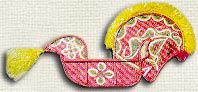
These small replicas of the larger kuda lumping that are used in a trance dance on Java are cut out from woven Kuda Lumpingbamboo mats and painted with striking colored patterns. Sequins, beads and other materials can also be added to give the kuda lumping its colorful appearance.

When given to a child, their imaginative minds are the only limit as to what dramas these kuda lumping are the center of! Although intended as a toy, many of these delightful horses end up in suitcases to be given as souvenirs of an expat's trip to Indonesia or smaller more colorful versions can be used as eye-catching decorations on Christmas trees.